
Low days seldom stay inside your head. Depression can drain your energy, disturb your sleep, and change how your body works. For many people, those changes eventually show up on the scalp. That’s why it is not wrong to say that depression and thinning hair are connected.
If you face thinning hair during a hard season, you have probably wondered whether anything can change what you see in the mirror right now. There is an answer, and most people have never heard of it.
How Depression and Thinning Hair Work Together?
Depression often travels with chronic stress, which keeps your cortisol levels high. That stress signal can push healthy follicles out of their growing phase too early. Doctors call this telogen effluvium. Two to three months later, those resting hairs shed. As a result, you notice diffuse shedding across the whole scalp.
Meanwhile, depression quietly erodes the habits that feed your hair. Skipped meals lower your iron and protein intake. Broken sleep interrupts cell repair. Even basic scalp care slips when getting out of bed feels hard.
Travel, Stress, and Scalp Health
Jet lag scrambles your sleep, while airport food and dry cabin air weaken your routine. So pack a gentle shampoo, drink water on long flights, and skip tight ponytails that tug on fragile strands. These small steps protect scalp health while your body recovers.
Can Depression Cause Thinning Hair Directly?
Researchers describe the link as indirect, yet real. Depression itself does not attack follicles. Instead, the stress, poor nutrition, and sleep loss around it do the damage. The relationship also runs both ways. Visible hair loss can deepen low mood and anxiety, so each problem feeds the other. That makes support for your mood just as important as scalp care.
Can Antidepressants Cause Hair Shedding?
Some can, although it remains uncommon. Research links certain medications, including bupropion, with a higher risk of shedding. Still, never stop a prescription on your own. Raise the concern with your doctor instead.
Does Hair Grow Back After Stress-Related Shedding?
Often, yes. Once stress eases, most follicles restart their normal cycle within six to nine months. However, depression can linger or return. Many people also carry genetic pattern baldness underneath, so the loss never fully reverses.
That leaves many people stuck in limbo. They wait, they hope, and they check the mirror every morning. But what if you did not have to wait for your follicles at all?
Can SMP Help Depression and Thinning Hair?
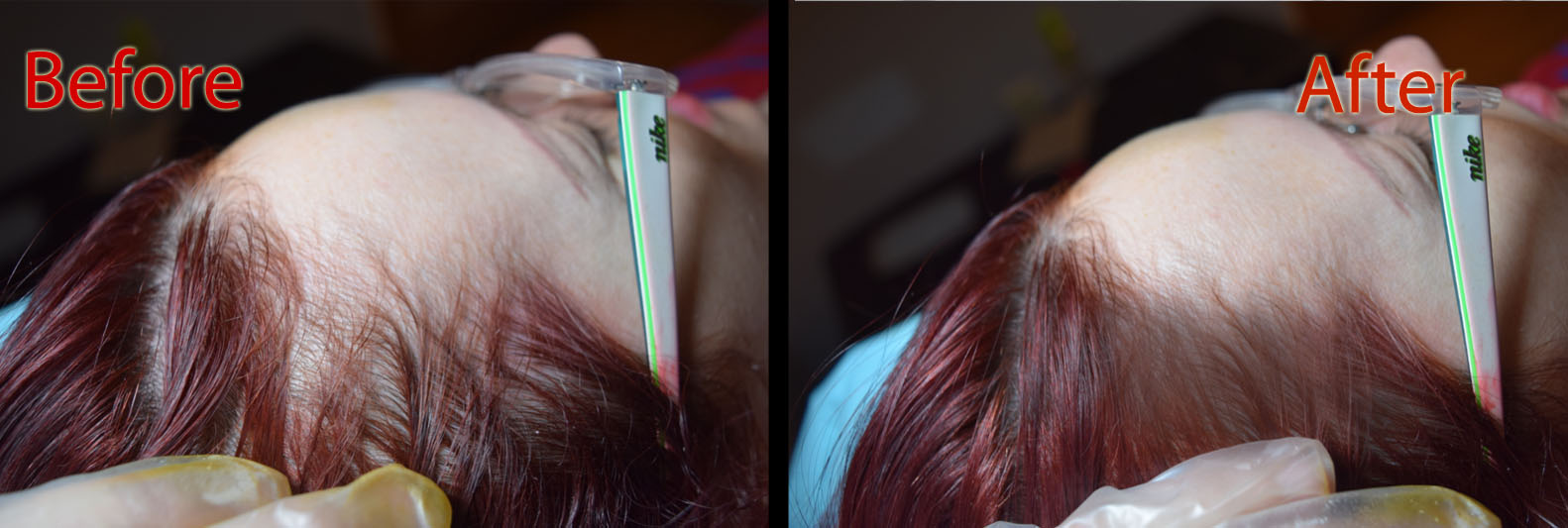
Yes, and it works on a different principle. Scalp micropigmentation places thousands of tiny pigment deposits into the upper skin. Each deposit mimics a natural follicle. For diffuse thinning, SMP fills the gaps between existing strands, so light no longer bounces off exposed skin. Your hair instantly looks thicker.
Does SMP Look Natural?
In skilled hands, it looks completely real. A trained practitioner matches pigment to your skin tone and varies dot size to copy genuine follicle patterns. Most clients reach their full result after two or three sessions.
Why SMP Offers Hope When Serums Fail
Hair growth serums depend on follicles that still respond. Many people apply them for months, only to see the same scalp staring back. SMP skips that waiting game. It delivers a reliable result that stress, travel, or a bad month cannot wash away.
However, choose your scalp artist in Arizona carefully. Today, many tattoo artists advertise SMP after a short weekend course. The wrong needle or deep placement can leave blurred dots and a blue-green fade. So look for a dedicated Arizona SMP specialist with healed-result photos and proper certification. Your scalp deserves an expert, not an experiment.
DermiMatch Clinic is the right place to find top scalp micropigmentation professionals even if you are suffering from depression and thinning hair.