
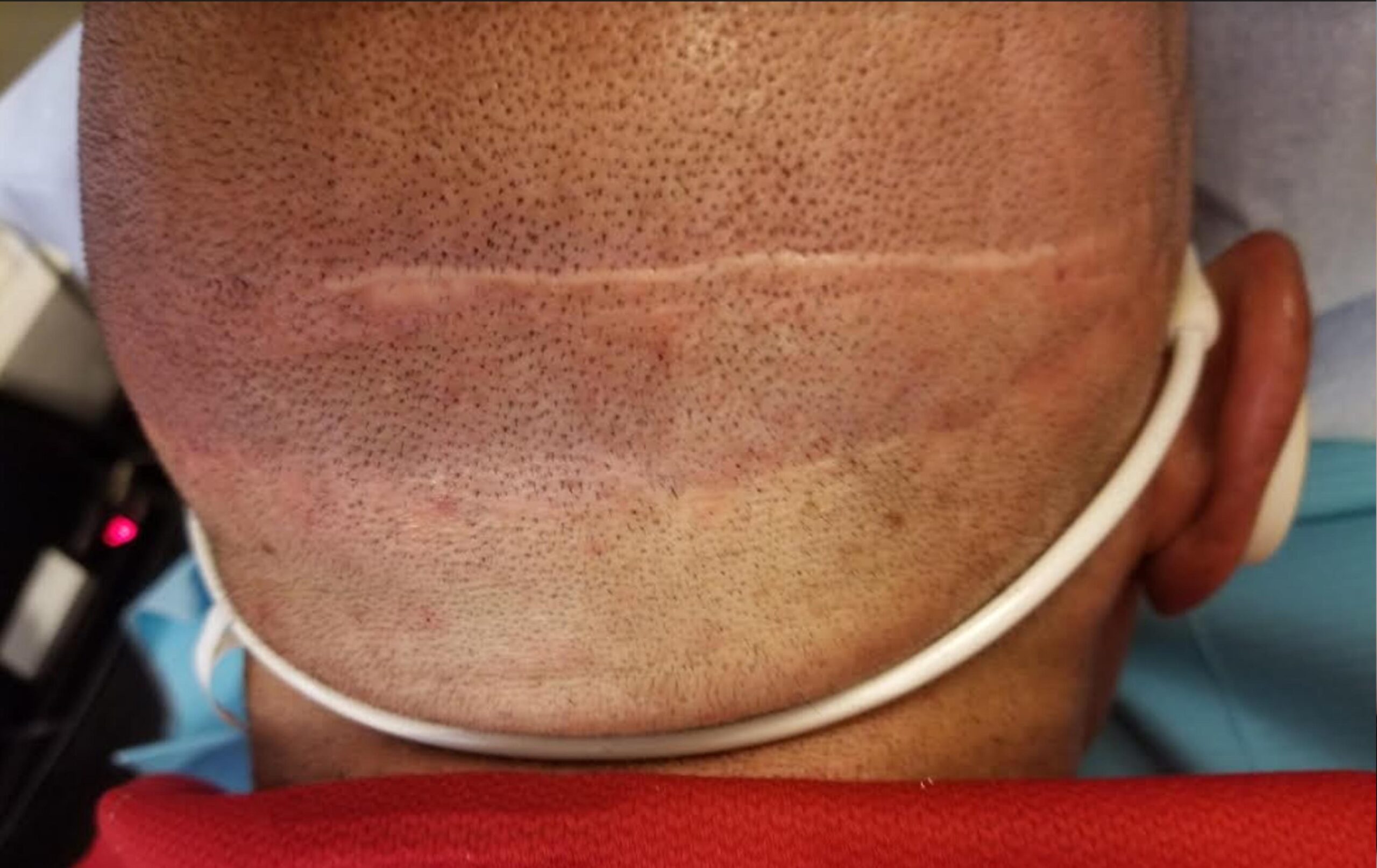
Most people research the front of the scalp before booking a hair restoration surgery. They study hairline design, graft counts, and before-and-after galleries. Almost nobody studies the back of the head, yet that is where the real risk sits. Surgeons pull follicles from the donor zone, and once those follicles leave, they never return. Take too many, and the back of the scalp turns thin, spotty, and impossible to hide with a short cut.
What Does Overharvesting Look Like?
Picture a lawn after someone has pulled clumps of grass at random. That patchy, moth-eaten texture describes an overharvested donor area perfectly. Sunlight makes it worse, and so do clippers.
Many men grow their hair longer purely to cover the damage, which feels like a cruel trade after paying for a fuller head of hair. Others live with a pale strip scar running ear to ear from older strip surgery.
Can a Second Surgery Fix A Bad Donor Area?
Patients ask this constantly, and the answer usually disappoints them. Rebuilding a depleted donor zone means moving follicles from somewhere else, and there is rarely anywhere else left.
Beard and body hair transplants exist, but the texture seldom matches, and results stay unpredictable. So a second operation often shifts the problem rather than solving it, while adding fresh healing time and fresh expense.
How Does Scalp Micropigmentation Repair The Damage?
Scalp micropigmentation works on contrast rather than growth. A scalp artist deposits microscopic pigment points into the upper scalp, spaced and shaded to imitate cropped follicles. Those points fill the visual gaps between your surviving hairs.
Suddenly, the eye reads an even shadow instead of bare patches. Extraction marks fade into the background, strip scars lose their pale outline, and the whole donor region reads as uniform stubble again.
Does SMP Hide Hair Transplant Scars Completely?
In most cases, it hides them. However, scar tissue takes pigment differently from healthy skin, so an experienced artist works in layers across several sessions and adjusts saturation carefully.
Wide, raised, or heavily stretched scars may still catch light at close range. Even so, the difference between a visible white line and a soft blended shadow changes how you wear your hair every single day.
Why Choose SMP after Failed Hair Restoration?
Scalp micropigmentation comes with a guarantee – nothing gets cut, nothing gets stitched, and no follicle leaves your head. You walk out of each appointment and back into normal life within a day or two.
Repair work sits at the hardest end of this craft. The Arizona SMP professional must map pigment around scars, uneven density, and old surgical trauma without creating blotches.
Meanwhile, tattoo artists keep adding SMP to their profile after a short course, and scalp skin punishes that inexperience with blurring, blue tones, and dots that spread. Ask specifically for healed donor repair photographs. One rushed decision already cost you your donor area, so make the next one count.
Schedule a consultation with top scalp micropigmentation Arizona professionals at DermiMatch Clinic now.