
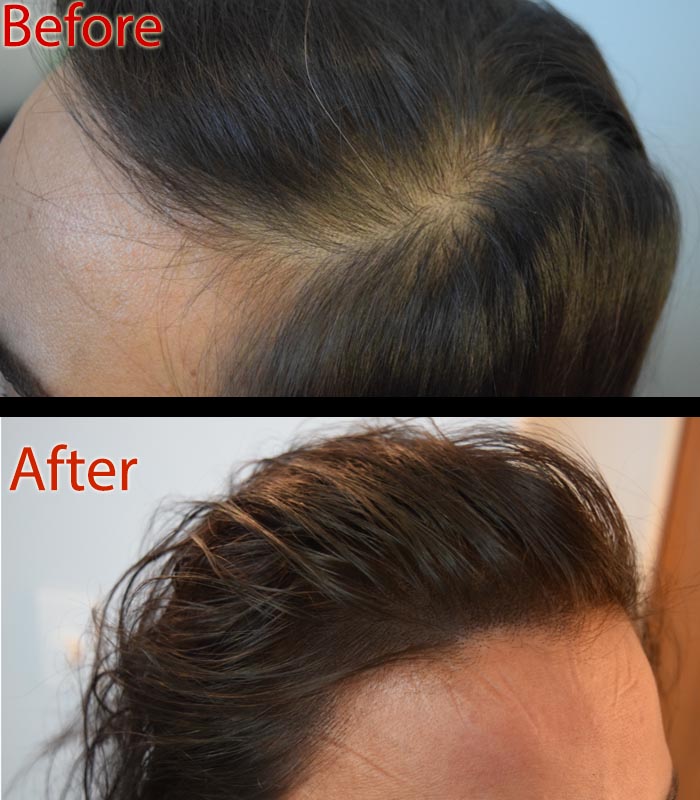
You brush your hair and see more scalp than before. Your ponytail feels smaller. In photos, your part looks wider. Menopause hair loss is very common, so you are not alone. Studies suggest about half of women notice thinner hair after menopause. Let’s look at why it happens and what really helps.
Why Does Menopause Make Hair Thin?
Your body makes less estrogen during menopause. Estrogen helps hair stay in its growing phase longer. When that hormone drops, other hormones get a stronger voice. As a result, many hair roots shrink and grow thinner, weaker strands.
Your genes play a part, too. If your mother had thin hair, you may see the same pattern on your crown and part.
Does Hair Grow Back After Menopause?
Sometimes it does. Stress, illness, or a sudden diet change can cause short-term shedding. In that case, hair often returns within a few months. Hormonal thinning works differently, though.
It tends to stay and may spread slowly. Take a photo of your part once a month in the same light. That way, you track real change instead of worrying every morning.
Can Vitamins Help Menopause Hair Loss?
They can, but only when your body truly lacks something. Low iron, low vitamin D, or a slow thyroid can make hair fall. A simple blood test shows what you need. Extra biotin rarely adds new hair if your levels are already fine. Instead, eat enough protein, fill your plate with greens, and ask your doctor before you buy pills.
Will a Special Shampoo Fix Thinning Hair?
No, shampoo can wake up a shrinking hair root. Still, the right products help. A gentle volumizing shampoo lifts fine hair and makes it look fuller. Skip tight buns, hot tools, and harsh dyes when you can. When you travel, pack your own mild shampoo, because hotel bottles can dry out fragile strands.
What Can a Doctor Offer?
A dermatologist can check your scalp and find the real cause. Many doctors suggest minoxidil, a liquid or foam you use every day. It may slow shedding and bring back some growth.
However, it needs six months or more to show results, and it only works while you keep using it. Some women also try prescription pills or PRP injections. Still, many women see scalp through their hair.
Natural-Looking SMP Starts With Customization
Scalp micropigmentation, or SMP, adds tiny dots of pigment to your scalp. These dots look like small hair shadows. A skilled artist picks a shade that matches your skin tone and hair color. Next, they place each dot to follow your natural part and hair pattern. Thanks to this careful planning, the result blends in. People simply see thicker-looking hair.
When Volume Never Returns, SMP Can Help
Maybe you tried hair growth serums, vitamins, and special shampoos. Your shedding has slowed, but your scalp still shows. This is where SMP shines. It does not grow hair. Instead, it fills the gaps between your strands, so your part looks tighter and your crown looks fuller. You can swim, travel, and smile for photos without powders or sprays.
Pick a True SMP Specialist
Be careful, though. Many tattoo artists now say they offer SMP, but they lack proper training. SMP needs special needles, special pigments, and a soft touch. Poor work can turn blue, spread, or look like a painted scalp. Always focus on choosing a trained and experienced Arizona SMP professional for your scalp job because your scalp deserves a real expert, not a guess.