
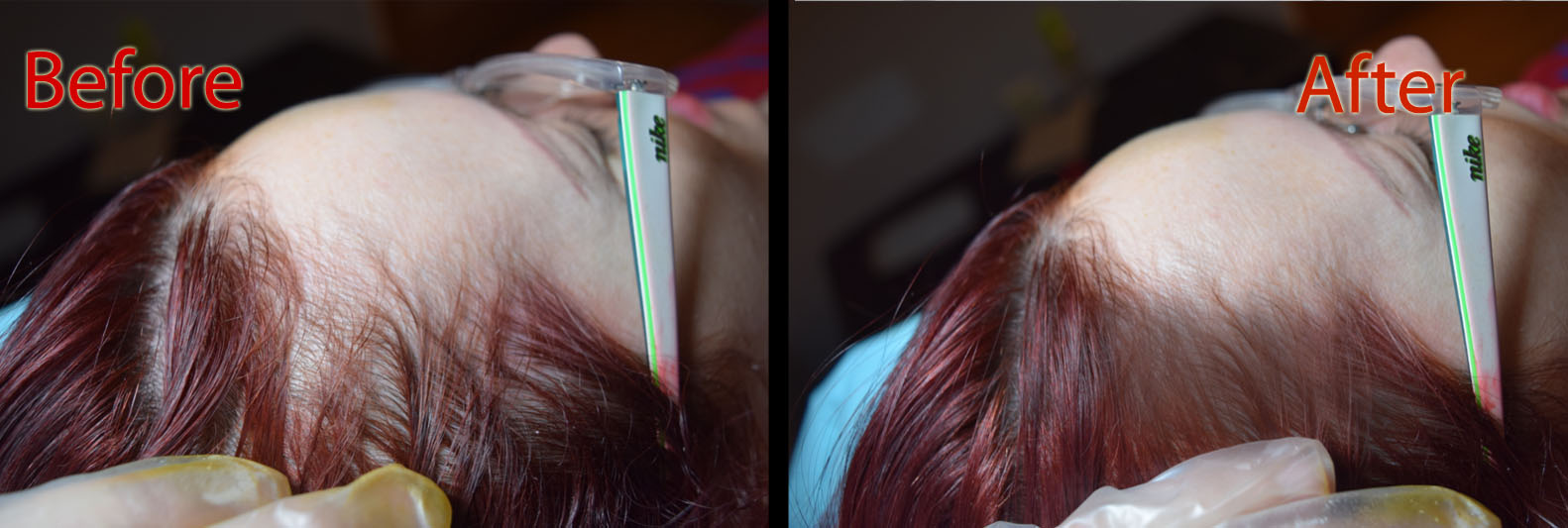
A widening part often becomes one of the first visible signs that a woman’s hair density has changed. The center line looks brighter under overhead light, photos reveal more scalp, and familiar hairstyles stop giving the same coverage.
Female pattern hair loss commonly creates this pattern. However, hormonal changes, stress-related shedding, traction, and nutritional problems can also affect scalp coverage, so women should understand why the part is widening.
Why Women Search For Minoxidil First?
For women researching thinning hair, minoxidil often becomes one of the first options they are drawn into trying. Dermatologists commonly recommend topical minoxidil for female pattern hair loss because it can support hair growth in suitable candidates.
Still, minoxidil does not deliver the same result for everyone. It requires consistent use, and visible improvement can take months.
Does minoxidil work for women? It can help many women with female pattern hair loss, but response varies, and stopping treatment can cause gained hair to disappear.
Can a Widening Part Grow Back?
Sometimes it can. Hair density may improve when temporary shedding, nutritional deficiency, postpartum changes, or another reversible trigger causes the wider part.
Female pattern hair loss behaves differently because it tends to progress. A dermatologist can help when the change appears suddenly, keeps spreading, or comes with scalp symptoms.
Even when treatment slows thinning, visible scalp may remain. That is where scalp micropigmentation can serve a different purpose.
How Does SMP Make a Widening Part Look Narrower?
Scalp micropigmentation does not create new hair. Instead, an SMP artist places tiny pigment impressions between existing hairs to reduce contrast between the scalp and surrounding roots.
That change matters along a widening part. Bright scalp can make thin hair look thinner, while matched pigment helps exposed areas blend into existing hair.
Women usually keep their normal hair length for density. Therefore, the scalp artist works through existing strands instead of creating the shaved-head effect many people associate with SMP.
Can SMP Work When Minoxidil Does Not?
Yes, because the two approaches solve different problems. Minoxidil aims to encourage hair growth, while SMP aims to make thinning areas look denser.
A woman may choose SMP after trying minoxidil or hair growth serums without seeing enough cosmetic improvement. Others may use it while continuing a dermatologist-directed plan.
SMP can also reduce reliance on fibers, powders, sprays, or daily camouflage.
What Does Natural-Looking Density SMP Require?
Good female SMP should disappear into the hair rather than announce itself. The artist must judge pigment tone, dot size, spacing, scalp color, existing density, and how the part moves during styling.
Too much pigment can make the scalp look flat or overly dark. Poor spacing can create clusters instead of the soft shadow that makes thin hair appear fuller.
Choosing Scalp Artist
More tattoo artists now advertise scalp micropigmentation in Arizona and elsewhere, but tattooing experience alone does not prove expertise in density. Traditional tattooing and widening-part SMP demand different visual goals, pigment control, and placement techniques.
Also ask how often the Arizona SMP practitioner performs the procedure and how they handle fading, touch-ups, hygiene, pigment selection, and future hair loss.
When minoxidil or hair growth serums fail to give enough visible coverage, scalp micropigmentation offers another route. The right SMP artist can make a widening part look less exposed and help existing hair appear fuller.
Choose the practitioner carefully. A skilled SMP specialist can create subtle density, while an inexperienced provider can leave results harder to hide than the widening part itself.