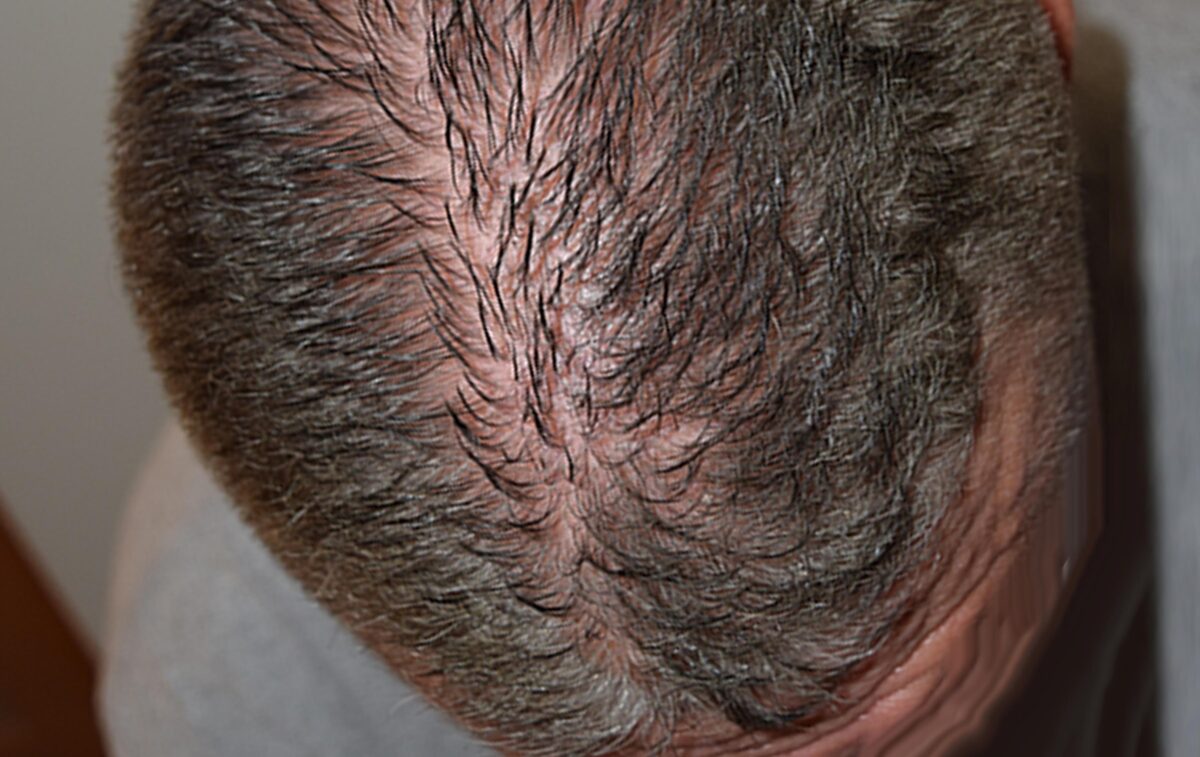
Psoriatic arthritis is more than a joint disease. It results in a full immune system disruption that shows up on the skin, too. For many people, the scalp takes the worst of it. Thick, raised patches appear near the hairline, behind the ears, across the crown, and along the temples. The skin turns red, purple, or brown depending on your skin tone. Sometimes it feels raw and sore to the touch. But it’s not always the case. It could be in the form of heavy scaling buildup, making the scalp look inflamed even when pain levels stay low.
This constant skin activity does something else, too. It slowly changes the look of the density of hair, regardless of how much hair you still actually have. That visible unevenness drives many people into searching for a minoxidil alternative.
Does Psoriatic Arthritis Cause Hair Loss?
This question comes up constantly, and the answer is nuanced. Scalp psoriasis does not always destroy hair follicles permanently. However, the cycle of inflammation, scratching, thick scale buildup, and harsh medicated shampoos weakens strands over time. Stress from managing a chronic condition adds another layer of shedding. Eventually, hair density drops in patches, parts look wider, and the crown thins faster than before.
The encouraging part is that hair can return after a controlled flare. Still, many people never fully recover their original density. Others get tired of waiting for hair regrowth since hair grows back slowly and unevenly, even after months of treatment. That’s when scalp micropigmentation steps in as a practical solution.
Why Minoxidil Falls Short for Sensitive Scalps?
Minoxidil requires daily application, long-term consistency, and a scalp stable enough to tolerate a chemical solution sitting on the skin. For someone managing psoriatic arthritis, active plaques, open areas, or inflamed patches respond poorly to minoxidil contact. Irritation can worsen existing skin sensitivity and trigger further discomfort.
Beyond that, minoxidil works on follicles. When chronic inflammation has already damaged or slowed those follicles, the results often disappoint. So people search for a minoxidil alternative that delivers visible confidence without depending on follicle performance at all. Scalp micropigmentation is that alternative.
Does SMP Help Psoriatic Arthritis-Induced Hair Loss Without Regrowth?
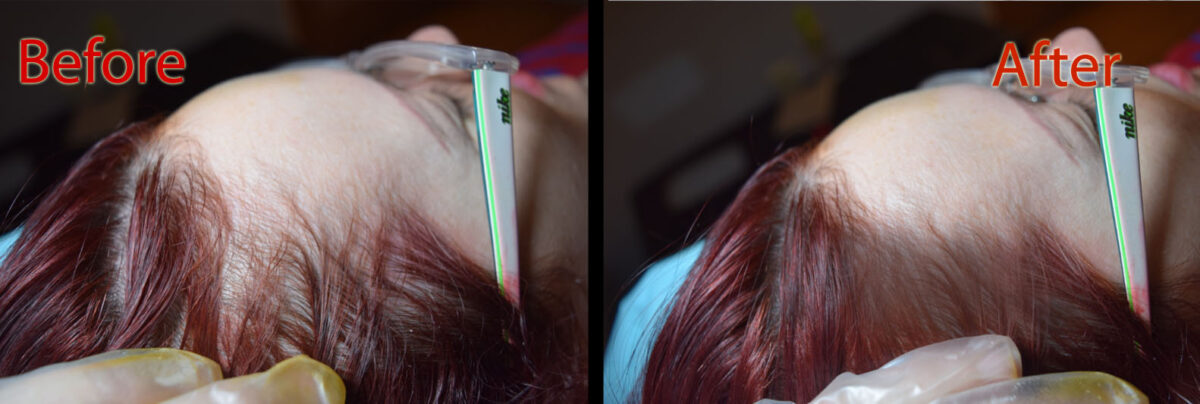
Scalp micropigmentation places tiny dots of specialized pigment into the upper layer of the scalp using a fine needle. Each dot replicates the appearance of a shaved hair follicle. Together, hundreds of these dots reduce scalp contrast, add the look of fullness, and even out patchy areas caused by thinning. The result is a scalp that appears denser, darker, and more defined.
But one thing is clear – SMP does not grow hair. Instead, it solves the visual problem directly. And for someone whose scalp has been through years of inflammation, scaling, and partial regrowth, that visual correction matters enormously.
Can You Get SMP With Psoriasis?
Yes, but timing determines success. A responsible Arizona SMP specialist will never work on skin that is actively flaring. Inflamed, cracked, or scaly skin does not hold pigment properly. Furthermore, any skin trauma during an active flare can trigger new psoriasis spots.
Therefore, the right approach treats psoriatic arthritis and SMP as a partnership, not a conflict. Manage the flare first, stabilize the scalp, then proceed with treatment during calm, clear periods. A skilled practitioner will map those stable zones carefully and build density gradually across multiple sessions.
What Makes SMP the Right Minoxidil Alternative for Long-Term Confidence?
Unlike serums and supplements, SMP gives visual results that do not fade away when you miss a day. After sessions are complete, the pigment sits as a cosmetic foundation across the scalp. Even if a future flare temporarily affects the skin surface, the underlying SMP result returns to view once the skin recovers. That durability makes it a compelling minoxidil alternative for anyone who has grown frustrated with the slow, unpredictable timeline of regrowth products.
SMP also works across all stages of thinning, from mild density loss to full coverage needs. It softens receding hairlines, fills in crown gaps, blends uneven patches, and creates a consistent scalp appearance that hair growth products rarely achieve even under ideal conditions.
But when it comes to scalp micropigmentation treatment, choose Arizona scalp experts, not tattoo artists. The reason is that SMP and tattooing are not two different procedures. Tattoo technique uses deeper needle penetration, larger dot sizes, and ink formulated for permanent skin art. Applied to the scalp, that approach creates dots that blur, spread, and darken unpredictably over time. The result looks unnatural. For someone with psoriatic arthritis and a sensitive scalp, that technique can also damage the skin.
Arizona SMP specialists at DermiMatch Clinic are trained in scalp anatomy, pigment behavior on different skin types, and hairline design. What’s more, they understand how inflammatory skin conditions affect healing and pigment retention. They know when to proceed and when to wait.
Schedule a consultation with a certified SMP practitioner with a documented portfolio, clear aftercare protocols, and specific experience with sensitive or condition-affected scalps.