Menopause hair thinning is one of the most talked about yet least understood changes women face in midlife. You might notice it first in the shower drain, then in your brush, then in the mirror — a parting that looks wider than it used to, a crown that feels lighter, a scalp more visible under bright light. It is not your imagination. It is biology, and it affects up to half of all women going through the menopause transition.
Why Does Menopause Cause Hair Thinning?
The short answer is hormones. During menopause, estrogen and progesterone — the hormones that keep hair in its active growth phase — drop significantly.
As these two hormones decline, androgens become comparatively stronger in the body. These androgens cause hair follicles to shrink over time, producing thinner, finer strands that grow more slowly and shed more quickly.
The result is diffuse hair thinning across the scalp, a wider part line, and a visible scalp that was never there before. Research confirms that estrogen plays a direct role in maintaining hair density, fullness, and the growth cycle itself, which is why menopause hair thinning tends to accelerate rather than stabilize on its own.
Is Menopause Hair Thinning Normal?
Yes, and more common than most women realize. Studies suggest that around two in three women experience noticeable hair thinning and increased shedding during the menopause transition. Many women also begin noticing changes during perimenopause, which can start in the mid-to-late forties or even earlier.
Genetics play a role too. Women with a family history of female pattern hair loss may find that menopause hair thinning is more pronounced and begins sooner. Stress, nutritional deficiencies, thyroid issues, and inflammatory conditions can result in hair shedding.
Can Menopause Hair Thinning Be Reversed?
This is the question every woman eventually asks. The honest answer is: sometimes, partially, and rarely completely. A healthy diet rich in protein, iron, omega-3 fatty acids, and zinc can support hair health.
Scalp massage, gentle hair care habits, and managing stress help maintain what you have. But none of these approaches addresses the root cause. They cannot reverse follicle shrinkage or restore density. This is a crucial distinction and the reason many women reach a point where natural approaches feel deeply frustrating.
What About Medications and Treatments?
Topical minoxidil for female pattern hair loss does help slow thinning and stimulate some regrowth for certain women. However, it takes three to six months to show results, requires ongoing daily use, and does not work for everyone.
Hormone replacement therapy can support overall health during menopause, but it is not meant for hair thinning. In fact, its effects on hair density vary greatly from person to person.
Oral finasteride, while effective in some postmenopausal women, carries risks and is not suitable for all. Platelet-rich plasma therapy and laser treatments show promise but require multiple sessions, consistent maintenance, and high cost over time.
The hard truth is that no medical treatment offers a guaranteed, immediate visual result for menopause hair thinning, and many women simply do not want to wait months for a partial improvement.
How Does SMP Help Women with Menopause Hair Thinning?
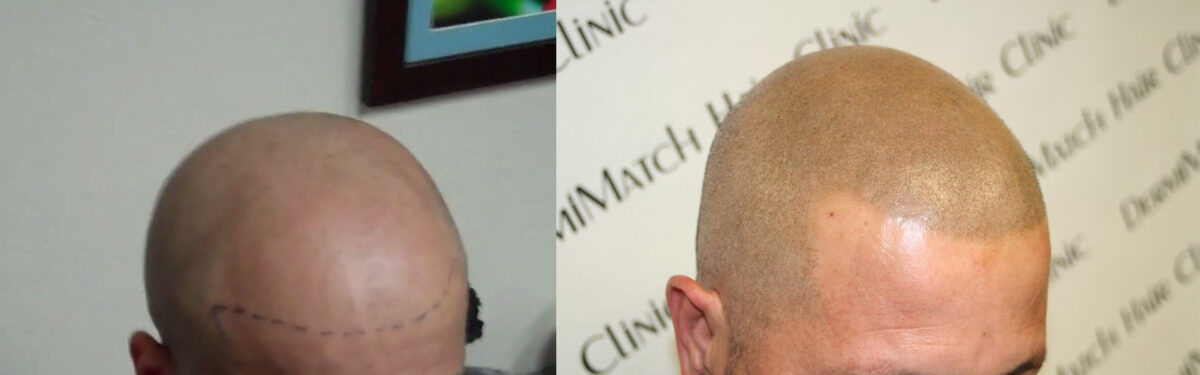
Scalp micropigmentation, commonly known as SMP, is a non-surgical cosmetic procedure where ultra-fine microneedles deposit specialized pigment into the upper layers of the scalp. The pigment replicates the look of tiny hair follicles, reducing the visual contrast between hair and scalp.
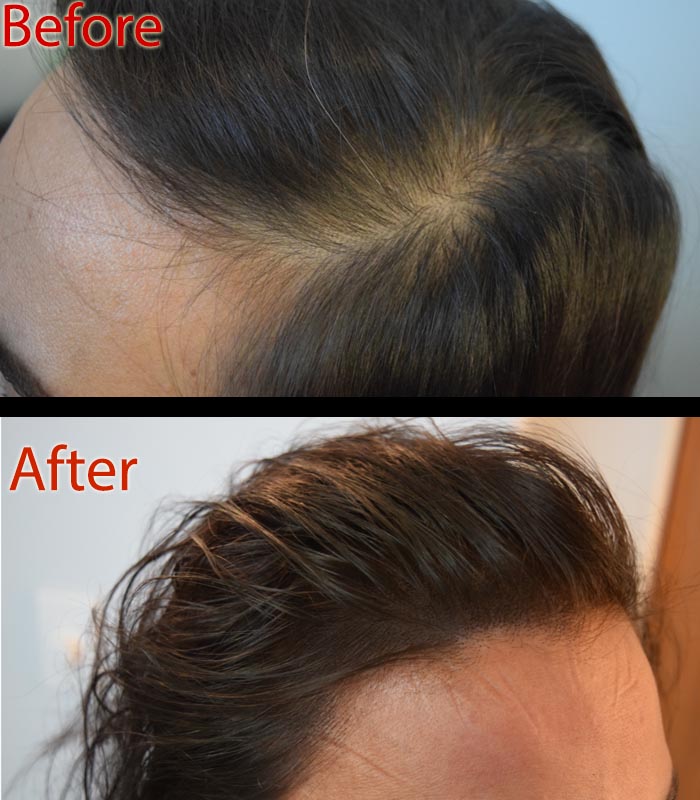
For women dealing with menopause hair thinning, this means the scalp appears less exposed, the part line looks denser, and the overall impression is of fuller, thicker hair — without a single tablet, surgery, or waiting period. SMP does not grow hair, and it makes no claim to. What it does instead is transform the way your scalp looks, often after just the first session.
Does SMP Work for All Types of Hair Thinning from Menopause?
SMP is particularly well-suited to the type of diffuse hair thinning that menopause causes. Whether thinning is concentrated along the part, spread across the crown, or more general across the scalp, pigment can be carefully placed between existing strands to build a sense of depth and density.
Women with longer hair can still benefit enormously, because the SMP technique for women does not shave or replace the hair — it works around it, enhancing what is already there. Pigment is matched to your natural hair color and skin tone, making the final result look seamless and natural. Results typically last four to six years, with only a brief touch-up session needed to refresh them.
SMP does not require a waiting game. It does not interact with medications. It has minimal downtime, no surgery, and no recovery period that disrupts daily life. You can swim, exercise, and style your hair exactly as you normally would once healing is complete.
A tattoo artist applying standard tattoo ink at tattoo depths will not produce the soft, follicle-like dots that SMP requires. What you risk instead is unnatural-looking marks, mismatched color, patchy density, or pigment that turns blue or green over time — all of which draw attention to the very thing you were trying to conceal.
For women with menopause hair thinning, the stakes are even higher. Female SMP requires a nuanced understanding of how diffuse thinning presents differently to male pattern hair loss, how to work around existing hair without damaging it, and how to create a result that looks natural under all lighting and at all distances. This is a specialized skill that demands real training, a specific portfolio of female hair loss cases, and genuine expertise in color matching for women’s scalp and hair tones.
Choose experience, specialization, and a practitioner who understands what menopause hair thinning does to a woman’s confidence — and how to genuinely restore it with SMP in Arizona. Only the best Arizona scalp practitioner can do that.
You can find them at DermiMatch Clinic.