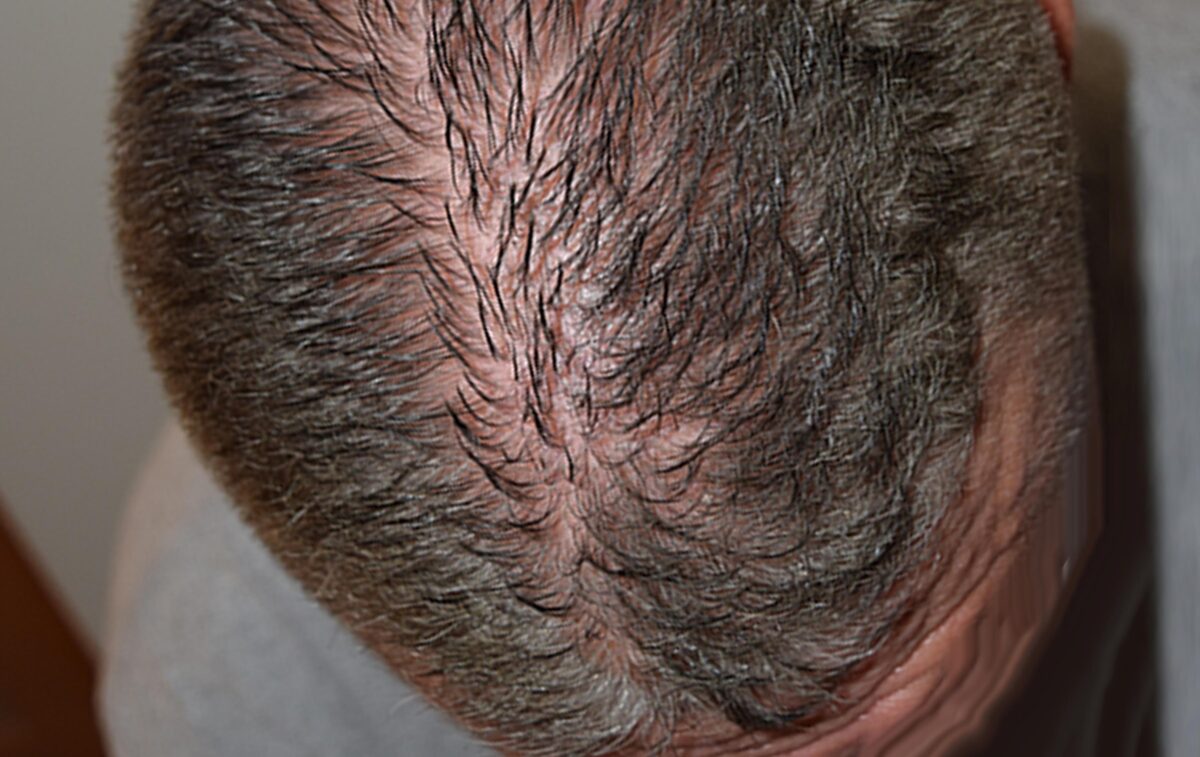
Most women expect hot flashes and sleep disruptions during menopause. Fewer expect to watch their hair thin out. Yet hair thinning after menopause ranks among the most common and least discussed changes women face in their 50s.
The shift usually begins quietly. The part line gets a little wider. The ponytail loses its weight. More strands collect on the pillow each morning. Then one afternoon, a photo or a mirror catches the scalp under bright light, and the reality becomes hard to ignore.
Falling estrogen and progesterone levels slow the hair growth cycle after menopause. Hair enters the shedding phase faster and grows back more slowly. The result shows up as diffuse thinning across the crown, temples, and part line. However, hormones are not always the only factor. Thyroid imbalances, iron deficiency, chronic stress, and certain medications can also accelerate shedding.
When Serums and Supplements Stop Delivering
Many women turn to topical products first. Minoxidil-based formulas, peptide serums, caffeine blends, and biotin supplements all promise to support regrowth. Some women see modest results. Many others do not.
Hair thinning after menopause often involves follicle miniaturization. When follicles shrink and weaken over time, topical products struggle to reverse the damage. A serum needs active, responsive follicles to work. Once those follicles lose their vitality, the product has nothing strong enough to wake them up.
That gap frustrates women deeply. Despite months of consistent use, the scalp still shows through fine hair in photos. Fibers and volumizing sprays cover the problem for a few hours, but sweat, wind, or a change in lighting quickly undermines that effort. The search for something more lasting eventually leads many women to scalp micropigmentation.
What does scalp micropigmentation actually do?
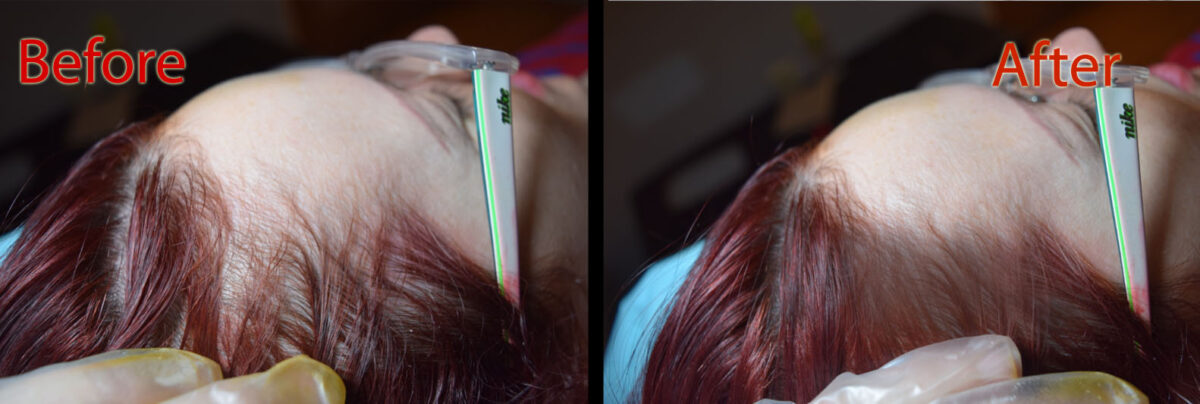
Scalp micropigmentation, or SMP, does not grow new hair. Instead, it places tiny pigment deposits on the scalp to mimic the look of natural hair follicles. Those small dots reduce the contrast between the hair and the skin beneath it. The result makes thin areas appear denser, the part line looks softer, and the overall scalp is less visible through fine strands.
For women experiencing hair thinning after menopause, that visual improvement can feel transformative. SMP requires no surgery, no donor hair, and no extended recovery period. Most women complete treatment in two to three sessions, spaced about a week apart. After healing, the result integrates naturally into the existing hair and stays low-maintenance for years.
Women also appreciate that SMP works regardless of hair length. The artist places pigment between existing strands rather than over a shaved scalp. No one needs to cut their hair short to benefit from the procedure.
Does SMP replace other treatments?
Not necessarily. Many women continue to use topical products alongside SMP. A serum may help preserve existing strands, while SMP handles the visual gap that the serum cannot close. Both serve different purposes, and combining them makes sense for women who want the most complete approach.
Now you might wonder if SMP looks natural on women with long hair. The answer is that the results depend on the artist you choose. When an experienced artist matches the pigment tone and dot size to the client’s natural hair color and scalp skin, the result looks soft and blends seamlessly.
Does hair thinning after menopause require a special SMP technique?
Postmenopausal diffuse thinning calls for a lighter touch, smaller dots, and careful blending around the hairline. An aggressive or heavy-handed approach creates an artificial appearance.
How long does SMP last?
Most clients see results hold well for four to six years before a touch-up refreshes the pigment. Sun exposure and skin type affect how quickly the pigment fades.
SMP looks deceptively simple from the outside. In practice, it demands precision, restraint, and a thorough understanding of scalp anatomy, pigment behavior, skin aging, and female hair patterns. Not every practitioner brings those qualities to the table.
The rise of tattoo artists offering SMP as an add-on service concerns many Arizona scalp micropigmentation professionals. Traditional tattooing and scalp micropigmentation serve entirely different goals. A tattoo needle drives ink deep into the skin for bold, lasting color. SMP places fine pigment at a shallow depth to replicate tiny follicle impressions. The techniques, needle configurations, pigment types, and depth control differ significantly between the two crafts.
A tattoo background does not automatically translate into SMP skill. Poor technique produces dots that look oversized, too dark, or blue-tinted as they age. For women managing hair thinning after menopause, a bad result can worsen the very insecurity they sought to resolve.
Choose a practitioner who specializes exclusively in Arizona SMP jobs, trains regularly, and carries a portfolio of female clients with diffuse thinning. The quality of the result depends entirely on the person holding the needle.
Hair thinning after menopause deserves a thoughtful, tailored response. SMP at DermiMatch Clinic is one of the most practical and natural-looking paths forward. Choosing the right artist turns that path into a confident one.
Schedule a consultation with the best scalp micropigmentation professionals in Arizona!