
CALL TODAY! 480-788-2432
CALL TODAY! Service: 480-788-2432 | Products: 833-436-4247
Categories
scalp micropigmentation

Types of Scars and SMP

There are different types of scars and SMP offers a permanent solution. But let’s first understand what a scar is. A scar is your body’s natural response to an injury. In this process, it replaces damaged skin. Composed of fibrous tissue, a scar may form from an injury, surgery, or infection. Inflammation of tissue may also be responsible for scar development. How a scar appears is determined by the skin type. Its location on the body also decides the final look of a scar.

Types of scars

Keloid Scars

Rounded, thick, and irregular scar tissue clusters growing at the site of a wound are categorized as keloid scars. Such scars appear red in color than the surrounding skin. They form from collagen after wound healing. Keloid scars are more apparent in darker-skinned people and may form within one year after the trauma to the skin.

Hypotrophic Scars

It is a hyperpigmented scarring that occurs due to the loss of collagen. One example of hypotrophic scarring includes acne and chicken pox. A person may get a hypotrophic or sunken scar after a hair transplant.

​Hypertrophic Scars

Similar to keloid scars, hypertrophic scars do not extend beyond the original boundary of the skin problem or injury. This type of scars may appear thick, elevated, and red. Hypertrophic scars may develop after a few weeks of the injury.

SMP for Scars

Does micropigmentation work on scar camouflage?

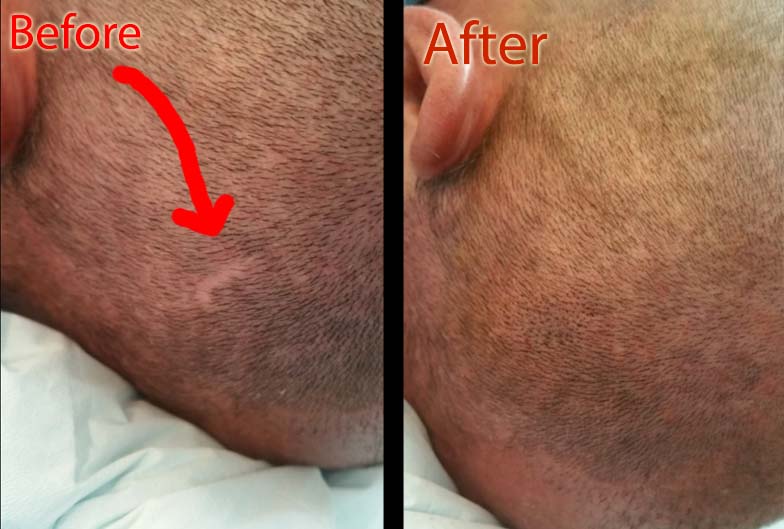
SMP is a safe solution for scar removal or camouflage. In fact, it is one of the most effective ways to hide scars and create a fuller-hair look. However, only an experienced and skilled SMP artist knows how a scar heals. They understand that inserting pigment directly into a scar will not produce natural results. Scars are notorious for rejecting ink. Only an expert scalp practitioner can work on scar camouflage.

How can I permanently cover up scars?

No matter what types of scars you want to be removed, a scalp professional uses the best scar pigment to camouflage scars. They leverage their experience to insert thousands of pigmented microdots into the scar site. Their goal is to hide any sign of scar and create the appearance of a buzzcut or a freshly shaved head. Scar treatment may need multiple sessions to permanently cover scars. It is not possible to remove different types of scars and SMP can be used effectively to conceal them.

If you have a scar from FUT transplant or FUE scars, Arizona SMP practitioners can hide the donor sites completely, depending on your hairstyle. The objective of the treatment is to make it look natural and safe.

However, a scar must have healed fully before scar micropigmentation can begin. In some cases, it may take a fresh wound about 6-12 months of healing time.

Are you interested in scar camouflage?

SMP is a safe process to hide scars. The scar pigment used at DermiMatch Clinic is harmless and natural and has no precedence of allergic reactions thus far. Besides, the ink is deposited only at 0.6 to 1 mm depth, which ensures that sensitive areas remain untouched.

DermiMatch Clinic in Arizona is one of the most reputable scalp micropigmentation places in the state. Its SMP professionals are experts in scar camouflage and have years of experience in helping people suffering from hair loss and scalp problems. Scheduling a consultation with SMP technicians is easy on DermiMatch website.
Categories
scalp micropigmentation

Circular Hair Loss: What Is It?

Quite common among males, circular hair loss or clearly defined bald patches tell the tale of alopecia areata. Though hairless patches may be seen on any part of the body with hair, it becomes an eyesore when it becomes visible on the scalp. It begins with one area and may gradually expand into other parts. Bald patches are often the telltale signs.

Circular hair loss

Alopecia areata is the most common scientific name for circular hair loss among men and women. It was even known to Hippocrates. It has a long history, and the term first appeared centuries ago when foxes were affected by the condition.

What are the causes?

Alopecia areata is known as an autoimmune condition, where the immune system starts attacking its own hair follicles, considering them as foreign bodies. Its sole purpose is to destroy foreign elements. As a result, hair shedding starts, and the hair does not regrow in these patches. It is a genetic condition and could run in the family.

In some people, the hair never grows back, but in some people, there is still a possibility of hair growth. But in that case, it is likely to be very thin and white. You cannot expect the pigment to return.

Circular hair loss treatment

Unfortunately, there is still not much evidence to prove the science behind the sudden immune reaction against hair roots. As a result, it is the treatment for the same is tough. Some doctors choose to treat the condition with cortisone under the skin, though it may be risky if it is injected deeper.

Long-term treatment for circular hair loss

There’s no one solution to alopecia areata nor is there a guarantee that hair will grow back. A hair transplant is not the right treatment for circular hair loss, as the immune system will continue to attack hair roots, resulting in hair shedding.

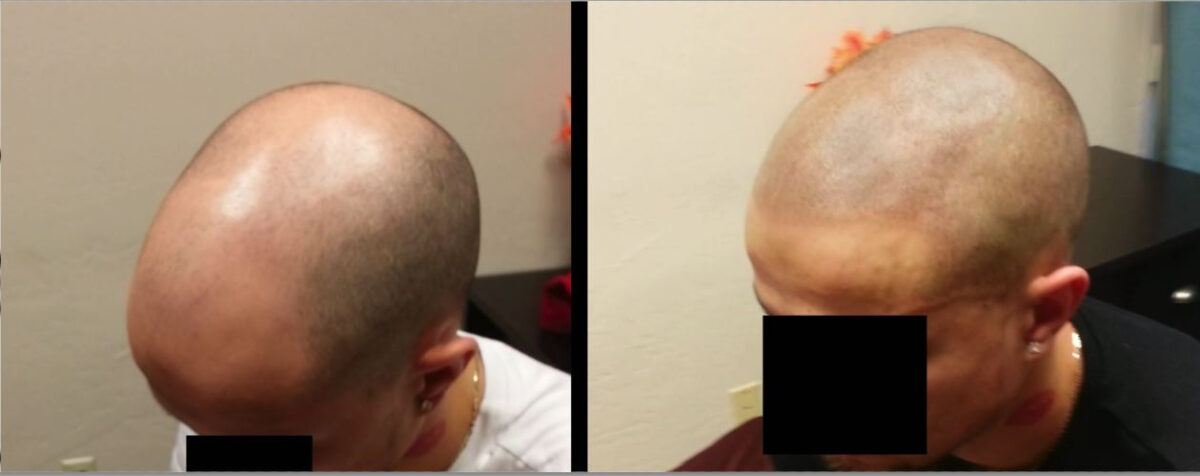
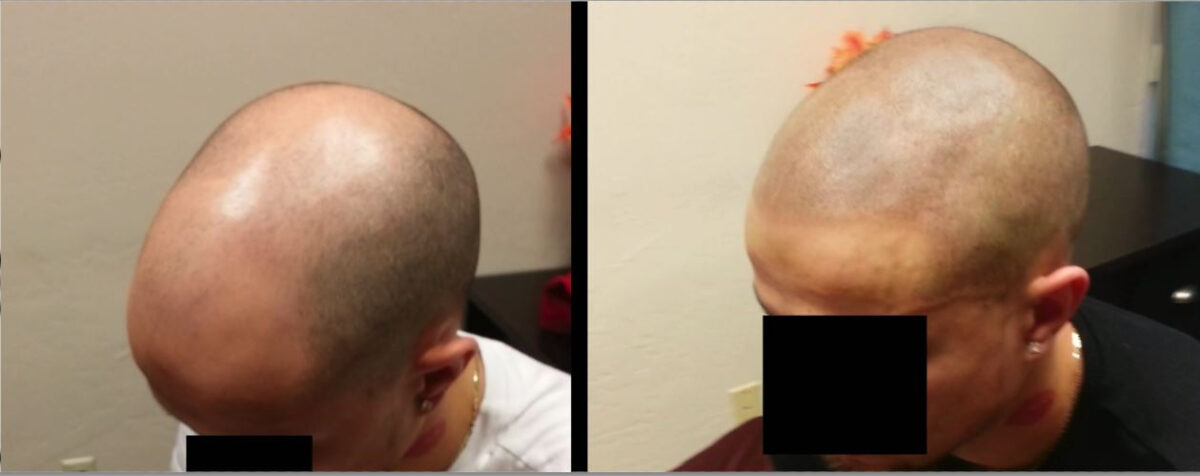
The only long-term way to treat alopecia areata is to hide the bald patches with scalp micropigmentation. During the procedure, the SMP practitioner applies pigments to the bald area to create the appearance of fuller hair. The goal of scalp micropigmentation is to create a natural appearance so it looks realistic with a stylish close-shaven look. With SMP, people suffering from alopecia areata can get a confidence boost as the procedure is permanent and helps improve physical appearance by hiding thinning hair, bald patches, or a receding hairline.

Is SMP the Best Treatment

Scalp micropigmentation can even work as an excellent solution for scar camouflage.

When performed by a skilled scalp practitioner, SMP dots are of the same as the average size of human hair. It is an excellent solution for advanced hair loss. People with circular hair loss may see a positive change in their looks and appearance with professional scalp micropigmentation.  Getting help from a top scalp practitioner can solve your circular hair loss woes. Connect with the best Arizona scalp micropigmentation specialists at DermiMatch Clinic and restore your looks and self-confidence. The time to get help is now!

Categories
scalp micropigmentation

SMP in One Day: Is It possible?

The most intriguing question for many clients is if SMP in one day is possible. So let’s try to find an answer here. Well, you might ask why can’t SMP be completed in one session. Scalp micropigmentation is a specialized intricate hair restoration solution that requires technical skills, knowledge of human anatomy, and an eye for detail. When working with a client, an SMP practitioner tries to add value to their experience and allay their fears about hair loss. They also go to the extent of making the procedure safe, secure, and pleasant for the client. The ultimate goal is to recreate the appearance of hair follicles and create a buzz-cut look. It may not be possible to include all minor details in one session.

Here are some of the main factors that determine the number of sessions required for SMP:

  • What and how much area needs to be covered?
  • Is there any scar tissue?
  • What is the level of fading experienced by the client?
  • What is the extent of hair loss and its pattern?

Is SMP in 1 session Possible?

While some scalp artists offer to do SMP in one day but that is practically not the best experience for clients. Remember, SMP is a layering process and the scalp artist applies the pigment in layers. The technician gradually builds up density and coverage with each session. Typically, one SMP session is not enough to ensure a lasting treatment.

The process involves making small, tattoo-like dots on the scalp to create the appearance of follicles. Each layer requires time to settle before the application of the new layer The goal is to ensure that the pigments blur. Scalp micropigmentation is a customized hair restoration technique. Every client’s needs are different. This includes skin and hair color, scalp problems, and the extent and type of hair loss.

Remember, SMP is not a one-size-fits-all solution. For clients with extensive hair loss, more scalp sessions can achieve the desired result.

Healing & recovery

Each scalp session requires adequate time for healing. Its during this period that the pigment settles down and fades slightly. A little amount of fading is natural as the body fights any external factor as an enemy. It’s no use to rush the process unnecessarily to complete SMP in one session. This could result in complications and compromise the result.

SMP Sessions

The first session is often the longest, and the time for each session required goes down as the treatment progresses. The scalp practitioner will plan out the number of sessions required for each client considering various factors. First, the pigment used in the first session is light in shade. Second, the session may continue for 3-6 hours and may include breaks. This ensures that they don’t go too deep right at the start, without giving the client time to adjust to the pigment intensity. Depending on how the color looks after the first session, the scalp artist may add more density with each proceeding session.

By the second session, the SMP practitioner has already created a perfect hairline. This session is more about increasing volume by adding extra layers to create a more defined look. The second session may last 30-60 minutes less than the preceding one.

It’s time to make the final touches in the third session. Now the client can heave a sigh of relief and walk out in style and confidence with their completed look! This session may need 30-60 minutes less than its preceding session.

SMP in One Session Isn’t Practical

Some clients may need 4-7 sessions, depending on their scalp problem, for complete scalp micropigmentation. Irrespective of how many sessions are needed, it is critical to choose a skilled and reputable scalp artist who has expertise in the field of scalp micropigmentation. The best Arizona SMP professionals are associated with DermiMatch Clinic. Resolve your scalp problems by getting in touch with the best in the business.