Hormone replacement therapy gives millions of people real relief. It helps calm hot flashes and improve mood swings and sleep. Besides, it helps the body feel more balanced during menopause or other hormone transitions. For many, starting HRT feels like reclaiming control. But on the other hand, discovering that hair is thinning shortly after beginning treatment can feel like a cruel trade-off.
The thinning often begins quietly. The part looks slightly wider. The crown feels less dense. Bright light catches the scalp in a way it never used to. These changes may seem minor at first, but they compound quickly and affect confidence in ways that are hard to ignore.
Does HRT Actually Cause Hair Loss?
The relationship between HRT and hair is not straightforward. Hormones drive the entire hair growth cycle, so any shift in their levels can alter how follicles behave.
Estrogen generally supports the active growth phase of hair. When estrogen levels fluctuate or when certain synthetic progestins with androgen-like activity enter the picture, follicles sensitive to androgens can begin to miniaturize. Over time, this produces finer, shorter strands and a thinner-looking scalp.
Not everyone experiences this. Some people find their hair actually improves on HRT once hormonal chaos from menopause settles down. However, for those with a genetic predisposition to pattern thinning, a sudden hormone adjustment can accelerate what was already waiting in the background. A rapid dose change can also trigger telogen effluvium, pushing an unusually high number of hairs into the shedding phase at once.
Why Blood Work Still Matters?
Hair shedding on HRT does not always point directly at the hormones themselves. Many people in midlife also carry undetected deficiencies in iron, ferritin, vitamin D, B12, or zinc that silently weaken the follicle environment. Thyroid conditions, which occur more frequently in women during and after menopause, can also drive significant shedding.
Before drawing any conclusions, a thorough blood panel helps eliminate these overlapping causes. Addressing a ferritin deficiency or an underactive thyroid alongside HRT produces much better outcomes than treating hormones in isolation.
When Serums and Supplements Do Not Deliver
Hair growth serums get a lot of shelf space, but their results are inconsistent. Minoxidil works for some types of androgenic thinning with regular, long-term commitment. Biotin supplements make a difference only when a genuine deficiency exists. Specialty scalp oils and thickening shampoos improve texture at best but cannot create density the eye can actually see.
This is the wall many people hit. Months of consistent effort produce little visible change. The scalp still shows through under office lighting. The mirror still delivers disappointment. That gap between effort and result is exactly where non-surgical hair restoration enters the conversation.
How SMP Fills the Visual Gap?
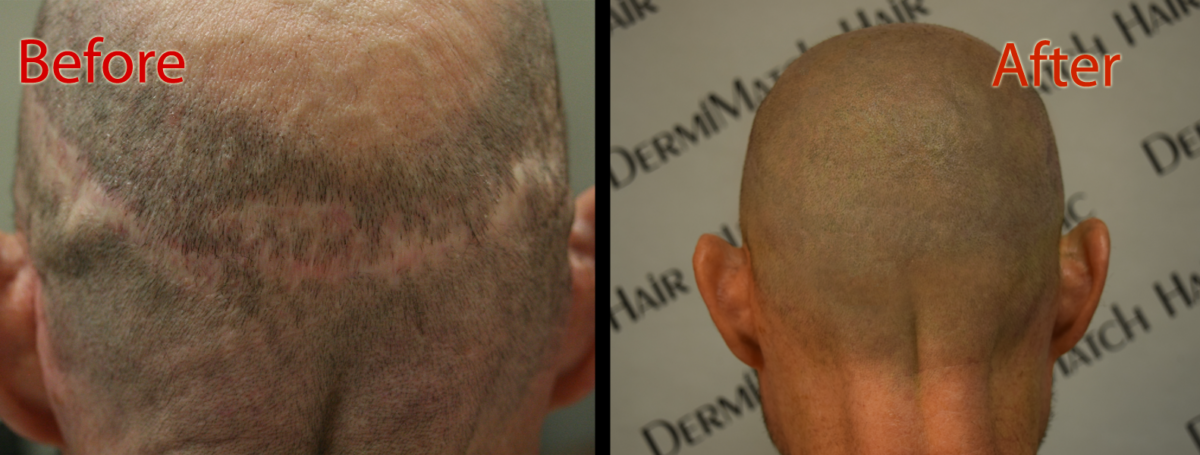
Scalp micropigmentation works differently from any serum or supplement. Instead of targeting biology, it addresses visibility directly. A trained SMP specialist deposits precisely sized pigment impressions into the upper dermis of the scalp, each one replicating the look of a natural hair follicle. The cumulative effect reduces the contrast between sparse hair and exposed scalp, creating the appearance of real density.
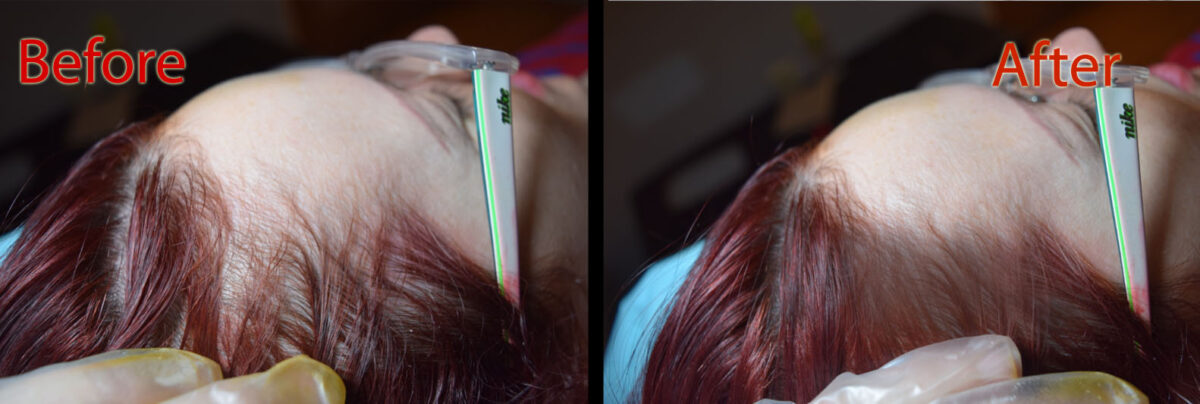
For women experiencing diffuse thinning after HRT, SMP can soften a widening part, restore the visual weight of the crown, and bring back a fuller-looking hairline without a single surgical incision. For men on hormone therapy noticing thinning zones, it can reconstruct the look of density or sharpen a closely shaved style. Results appear immediately, and with proper care they hold for several years before any touch-up is needed.
Non-surgical hair restoration through SMP also complements ongoing medical treatment. A person can continue working with their doctor on hormone optimization, iron supplementation, or minoxidil while simultaneously restoring a fuller look through SMP. Both efforts run in parallel.
But choosing scalp micropigmentation helps if you choose the right Arizona SMP professional for the job.
Traditional tattooing and scalp micropigmentation share almost nothing beyond a needle. Tattoo pigments penetrate too deeply into the dermis, migrate outward over time, and shift toward blue or green tones on the scalp. Tattoo dots are too large and too opaque to mimic a natural follicle. A scalp treated this way quickly looks artificial, patchy, or discolored.
Genuine SMP requires a different pigment chemistry, a different needle configuration, a different hand pressure, and a clinical understanding of scalp anatomy, skin undertones, and hair loss patterns.
A qualified SMP artist is skilled at working on different skin types. They are happy to discuss density mapping, hairline design, and how diffuse thinning in women requires a softer, less defined approach than the sharp edges used for complete baldness.
Hair loss after HRT can undermine confidence that hormone therapy was meant to restore. Non-surgical hair restoration with SMP experts at DermiMatch Clinic in Arizona offers a practical, proven path back to that confidence.