Nobody expects to lose their hair in their thirties. Most people assume it happens gradually when they enter middle age. But the reality hits differently. Thinning hair after 30 now affects roughly 40% of men by the time they reach 35, and a significant number of women face the same challenge before 40. The decade brings a convergence of factors that most people never see coming.
Why Thinning Hair After 30 Feels Different?
Your body changes significantly once you cross 30. Hormone levels shift. DHT, the hormone responsible for shrinking hair follicles, begins to exert more influence on genetically vulnerable scalp areas.
Hair growth cycles slow down on their own. Follicles that once bounced back now take longer to recover between cycles, and some stop recovering entirely. Nutrient absorption becomes less efficient with age, which means the scalp receives fewer of the building blocks it needs to produce strong, thick strands.
Stress compounds everything. Many people in their thirties carry more professional and personal pressure than at any earlier point in their lives, and chronic stress accelerates follicle miniaturization faster than most realize.
Does Thinning Hair Mean You Are Going Bald?
Well, a receding hairline that progresses beyond an initial shift, combined with visible thinning at the crown or a noticeably wider part, signals androgenetic alopecia rather than a temporary shed.
Many men and women dismiss early signs as seasonal shedding or product buildup. By the time they take action, six to twelve months of preventable loss may have already occurred. Early intervention always delivers better outcomes than delayed treatment.
Why Products That Worked Before Now Fail?
Many people who managed thinning hair successfully in their mid-twenties find that the same products lose their effectiveness after 30. The reason is straightforward. Minoxidil and topical serums work best on follicles that still retain some function.
Once DHT-driven miniaturization progresses past a certain threshold, topical stimulation cannot reverse the underlying damage. Finasteride blocks DHT production and remains clinically effective for many men, but it requires indefinite daily use and carries hormonal side effects that cause a meaningful number of users to stop.
Results also vary widely depending on how far loss has advanced before treatment begins.
What Actually Works For Thinning Hair After 30?
Acting early remains the most important factor in any plan. Combination therapy, pairing a DHT blocker with a topical stimulant like minoxidil, produces stronger results than either approach alone. Platelet-rich plasma therapy injects concentrated growth factors directly into the scalp and shows genuine promise for men and women in early to moderate stages of loss.
Low-level laser therapy improves blood circulation and follicle health over time, particularly when used alongside medication. Hair transplant surgery delivers permanent results for those with sufficient donor hair, though costs rise significantly.
The Honest Limitation That Nobody Talks About
Every treatment above shares one fundamental constraint. Each depends on follicle survival. Once a follicle stops producing hair entirely, no serum, supplement, medication, or laser brings it back. For people who reach their mid-to-late thirties with significant thinning already present, the window for meaningful regrowth narrows considerably.
Treatments shift from restoration toward damage control. That shift frustrates many people who spent years and considerable money on products that promised more than biology could deliver.
When Scalp Micropigmentation Becomes The Smarter Answer
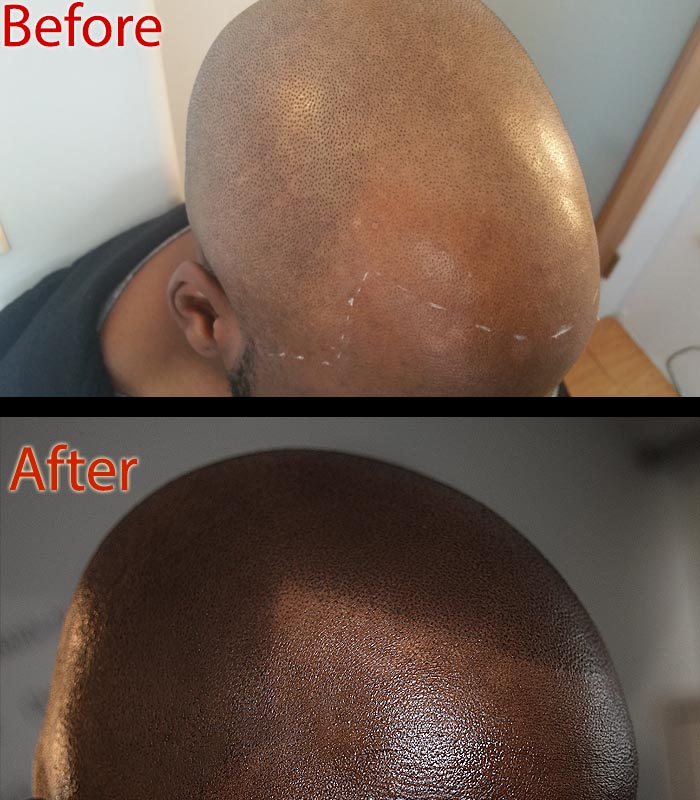
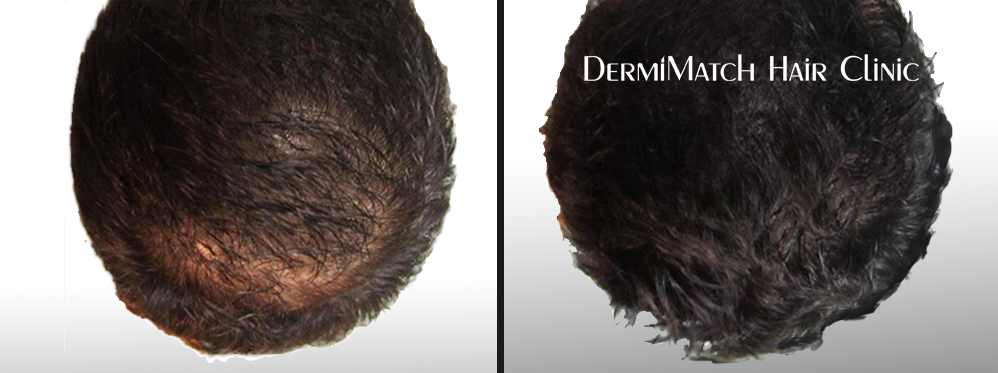
This is exactly where scalp micropigmentation steps in and changes the conversation. SMP does not ask anything of your follicles. Instead, it deposits precise pigment into the scalp to simulate the natural appearance of follicles, creating the look of cropped hair. It looks like a defined, full hairline. Results appear immediately after the first session. There are no waiting periods, no daily applications, and no dependence on how your body responds to medication.
Thinning hair after 30 responds exceptionally well to SMP because the technique works at any stage of loss. Whether someone shows early crown thinning or complete baldness, the process creates density and definition that looks natural under any lighting. Many clients who spent years cycling through failed treatments describe their Arizona SMP experience as the first time they felt genuinely in control of their appearance again.
SMP requires scalp-specific pigment formulas, precise needle depth, and a trained eye for natural hairline design that suits face shape, skin tone, and age.
A tattoo artist without dedicated SMP training frequently works too deeply, causing the pigment to spread and blur over time. Hairlines end up sharp and unnatural. Color fades unevenly. Correcting poor SMP work costs significantly more than a quality-first procedure.
Get your scalp micropigmentation Arizona job from experts at DermiMatch Clinic. They have been in the SMP industry for years, helping clients realize their dream looks. Are you ready?